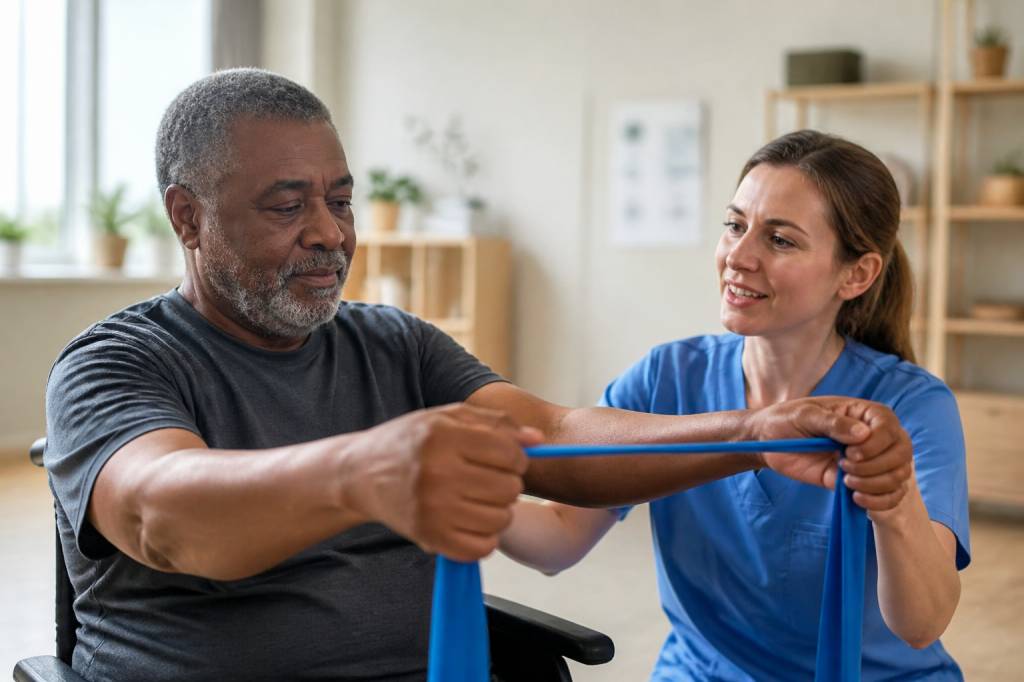
Occupational therapy is often described as practical, person-centred, and quietly transformative. It helps people do the everyday things that make life feel like life again: getting dressed, preparing a meal, returning to work, enjoying hobbies, or simply moving through the day with a little more ease. Behind that gentle, supportive approach sits a wide set of core skills that allow occupational therapists to provide truly effective patient care.
These skills are not just technical. They combine clinical judgement, empathy, creativity, and the ability to meet each person exactly where they are. And that is what makes occupational therapy so distinctive. A good occupational therapist does not simply ask, “What is the diagnosis?” They ask, “What matters to you?”
That simple shift changes everything.
Understanding the person before the problem
One of the most important core skills in occupational therapy is the ability to see the whole person. Two patients may have the same condition, but their lives, routines, priorities, and barriers can be completely different. One person may want to return to gardening after a stroke. Another may be focused on getting back to work, or being able to carry their toddler safely up the stairs.
This is why strong assessment skills matter so much. Occupational therapists need to gather information carefully and kindly, using observation, conversation, and clinical tools to understand how illness, injury, disability, mental health, or ageing affects daily function.
That assessment is more than a checklist. It is a conversation that should feel respectful and reassuring. When a patient feels heard, they are more likely to share the details that actually shape their care. And often, those details are the key to meaningful progress.
A patient may not mention that they avoid cooking because the kitchen layout makes them anxious, or that they stop taking part in social activities because fatigue hits by late afternoon. A skilled therapist notices these patterns and gently explores them. Sometimes the smallest observation opens the door to the most helpful intervention.
Communication that builds trust
Occupational therapy depends on communication. Not the polished, overly formal kind, but the warm, clear, adaptable kind that helps patients feel safe. People are often at their most vulnerable when they seek rehabilitation support. They may be frustrated, tired, embarrassed, or unsure about what comes next.
That is where communication becomes a core clinical skill. Occupational therapists need to explain complex ideas in simple language, listen without rushing, and adapt their style to suit the person in front of them. Some patients prefer a structured plan. Others need a little time to process information. Some want detailed explanations; others only want the essential points. Good communication respects those differences.
It also includes non-verbal cues. A calm tone, patient body language, and genuine attention can make a big difference. Sometimes the most therapeutic thing a clinician can do is sit quietly long enough for someone to feel comfortable speaking.
There is also a practical side to communication. Occupational therapists often work with families, carers, nurses, physiotherapists, doctors, employers, and social care teams. Being able to share information clearly, collaborate effectively, and keep everyone aligned helps ensure care feels joined-up rather than fragmented. And let’s be honest, fragmented care rarely feels soothing to anyone.
Clinical reasoning and problem-solving
Behind every tailored intervention is careful clinical reasoning. This is the skill that helps occupational therapists connect the dots between a person’s condition, environment, habits, strengths, and goals. It is what turns assessment findings into a practical, effective plan.
For example, if someone is struggling with dressing after shoulder surgery, the obvious issue may be reduced range of motion. But a therapist will also think about pain patterns, fatigue, home setup, preferred clothing, motivation, and possible equipment needs. Is the problem physical, environmental, behavioural, or all three? Would a dressing aid help? Could task modification reduce strain? Would pacing make the task more manageable?
Good clinical reasoning means not jumping too quickly to solutions. It means asking the right questions, testing assumptions, and adjusting plans when needed. This skill is especially valuable because real life is rarely tidy. A strategy that works well in clinic may need tweaking at home. A patient who seems confident in a session may struggle later when they are tired or distracted. Occupational therapists need to stay flexible and responsive.
There is a quiet art to solving these puzzles. It is one part science, one part observation, and one part creative thinking.
Goal setting that feels meaningful
Goals are at the heart of effective occupational therapy. But the best goals are not generic or therapist-led. They are personal, realistic, and motivating. They reflect what the patient actually wants to do, not just what a care plan says they should do.
This is an important skill because meaningful goals drive engagement. A person recovering from injury may not feel inspired by “improve upper limb function.” But they may feel deeply encouraged by “make a cup of tea independently” or “return to the choir I miss every Thursday.” Specific goals give rehabilitation a human shape.
Setting good goals also requires balance. They need to be ambitious enough to encourage progress, but not so large that they feel overwhelming. A thoughtful occupational therapist helps break a bigger aim into manageable steps. That might mean working first on endurance, then on grip strength, then on the confidence to try the task unaided.
There is something reassuring about this process. Progress becomes visible. Even small gains matter. And in occupational therapy, small gains often lead to life-changing independence.
Adaptability in everyday interventions
Occupational therapy is full of practical solutions, but no two situations are exactly the same. That is why adaptability is such a valuable core skill. Therapists often need to adjust interventions in the moment, based on how someone is feeling, what resources are available, or how an environment is arranged.
One patient may benefit from assistive technology. Another may need a simpler routine, energy conservation strategies, or changes to their workspace. Someone else may need sensory regulation techniques, mindfulness support, or graded exposure to a difficult activity.
This flexibility is especially important across different settings. In acute hospitals, therapists may focus on discharge planning and safety. In community care, they may support long-term independence at home. In mental health services, they may help people rebuild routine, confidence, and participation. In every setting, the core challenge is the same: adapting care to fit the person, not forcing the person to fit the care.
That kind of responsiveness is not improvisation for the sake of it. It is skilled, purposeful, and grounded in clinical judgement.
Promoting independence with dignity
At the heart of occupational therapy lies a deep respect for independence. But independence is not always about doing everything alone. Sometimes it means doing a task with the right support, in the safest and most sustainable way possible.
That distinction matters. A therapist may recommend equipment, environmental changes, or task modification not because a person has “failed” in any way, but because their energy, mobility, cognition, or pain levels need support. The goal is dignity, not perfection.
Imagine a person with arthritis who gives up cooking because opening jars has become a battle. A therapist might introduce jar openers, recommend joint protection techniques, and suggest altering the order of tasks to reduce strain. The result is not just a more manageable kitchen routine. It is the return of confidence, identity, and pleasure.
This is one of the most beautiful aspects of occupational therapy. Small changes can restore a person’s sense of self. And that can be far more powerful than it first appears.
Understanding physical, cognitive, and emotional needs
Effective patient care in occupational therapy depends on recognising how different aspects of health interact. Physical limitations may affect function, but so can memory difficulties, attention problems, low mood, anxiety, pain, fatigue, or lack of confidence.
Therapists therefore need a broad understanding of the body and mind. They may support someone with neurological changes, help a person with depression rebuild routine, or work with someone whose fatigue is limiting participation in daily life. Often, these issues overlap.
A patient recovering from a brain injury, for example, may need support with planning, sequencing, and attention as well as physical rehabilitation. Someone living with chronic illness may need strategies for pacing and emotional adaptation. A child with sensory processing differences may need help managing both regulation and participation in school activities.
This holistic view is one of the defining strengths of occupational therapy. It allows care to address not only what someone can do, but what gets in the way of doing it consistently and with confidence.
Education that empowers patients
Education is another core skill, and it is often undervalued. A patient who understands their condition and the reason behind a strategy is far more likely to use it well. This is not about overwhelming people with information. It is about giving them just enough, in a way they can absorb and apply.
Occupational therapists often teach pacing, joint protection, ergonomic principles, cognitive strategies, energy conservation, or safe transfer techniques. They may demonstrate equipment, provide written advice, or use practical practice to build confidence. The tone matters here too. Education should feel empowering, never patronising.
For example, a therapist working with someone experiencing fatigue may explain the “spoon theory” in everyday language, helping the person plan activities around limited energy. A person with anxiety might benefit from understanding how gradual exposure can reduce avoidance over time. A patient with post-operative restrictions may need clear, simple guidance on what is safe and what needs to wait.
When education is done well, it supports self-management. And self-management is often what sustains progress once a patient leaves the clinic.
Creativity in finding workable solutions
Occupational therapists are often quietly inventive. Creativity is not a decorative extra in this field; it is a core professional skill. When standard approaches do not quite fit, therapists need to think in fresh, practical ways.
Maybe a patient cannot manage a shower chair in a small bathroom. Perhaps a kitchen task can be broken into smaller steps to reduce fatigue. Maybe a child engages better with therapy when it is embedded in play rather than delivered as a formal exercise. A creative therapist sees possibility where others may only see limitations.
Sometimes creativity also means making use of what is already around. A rolled towel, a different chair height, a phone reminder, a re-arranged shelf, a simple routine chart. These may sound modest, but they can have a huge effect on daily function.
There is something very human about that kind of problem-solving. It respects the reality of everyday life. After all, most people do not need perfect solutions. They need workable ones.
Working collaboratively with the wider team
No occupational therapist works alone. Collaboration is essential, especially when a patient’s needs are complex. Strong teamwork helps care stay coordinated and consistent across settings and professionals.
This might mean liaising with physiotherapists about mobility goals, speaking with nurses about safe routines, discussing medication-related fatigue with a doctor, or working with family members who support daily activities at home. In schools, workplaces, hospitals, and community services, the therapist often acts as a bridge between the person and the systems around them.
Good collaboration requires humility as well as expertise. It means recognising what others bring to the table and being willing to learn from them. It also means advocating for the patient when needed. Sometimes effective care depends on making sure the right voice is heard in the right room.
Compassion, patience, and professional boundaries
Technical skills matter, of course. But occupational therapy is also profoundly relational. Compassion helps patients feel safe enough to keep trying. Patience gives them the time they need to build confidence. Professional boundaries ensure support remains ethical, respectful, and sustainable.
Patients may move slowly. They may feel discouraged. They may have days when progress seems to vanish. A therapist with emotional steadiness can help them stay grounded through those fluctuations. That does not mean pretending everything is easy. It means acknowledging difficulty without losing hope.
And perhaps that is one of the most valuable parts of occupational therapy: it reminds people that recovery and adaptation are rarely linear. There are good days, tired days, and “I do not feel like doing any exercises today” days. A thoughtful therapist meets all of them with calm realism.
Why these core skills matter so much
Effective patient care in occupational therapy is never built on one skill alone. It comes from the careful combination of observation, communication, reasoning, adaptability, education, creativity, and empathy. Each one supports the others. Together, they help therapists deliver care that is practical, person-centred, and genuinely meaningful.
When these skills are used well, the impact can be deeply personal. A person can return to work after illness, rediscover the confidence to cook for their family, manage fatigue with more ease, or feel calmer navigating everyday life. Those outcomes may look ordinary from the outside. For the person living them, they are anything but.
That is the quiet power of occupational therapy. It meets people in the middle of real life and helps them move forward, one workable step at a time.